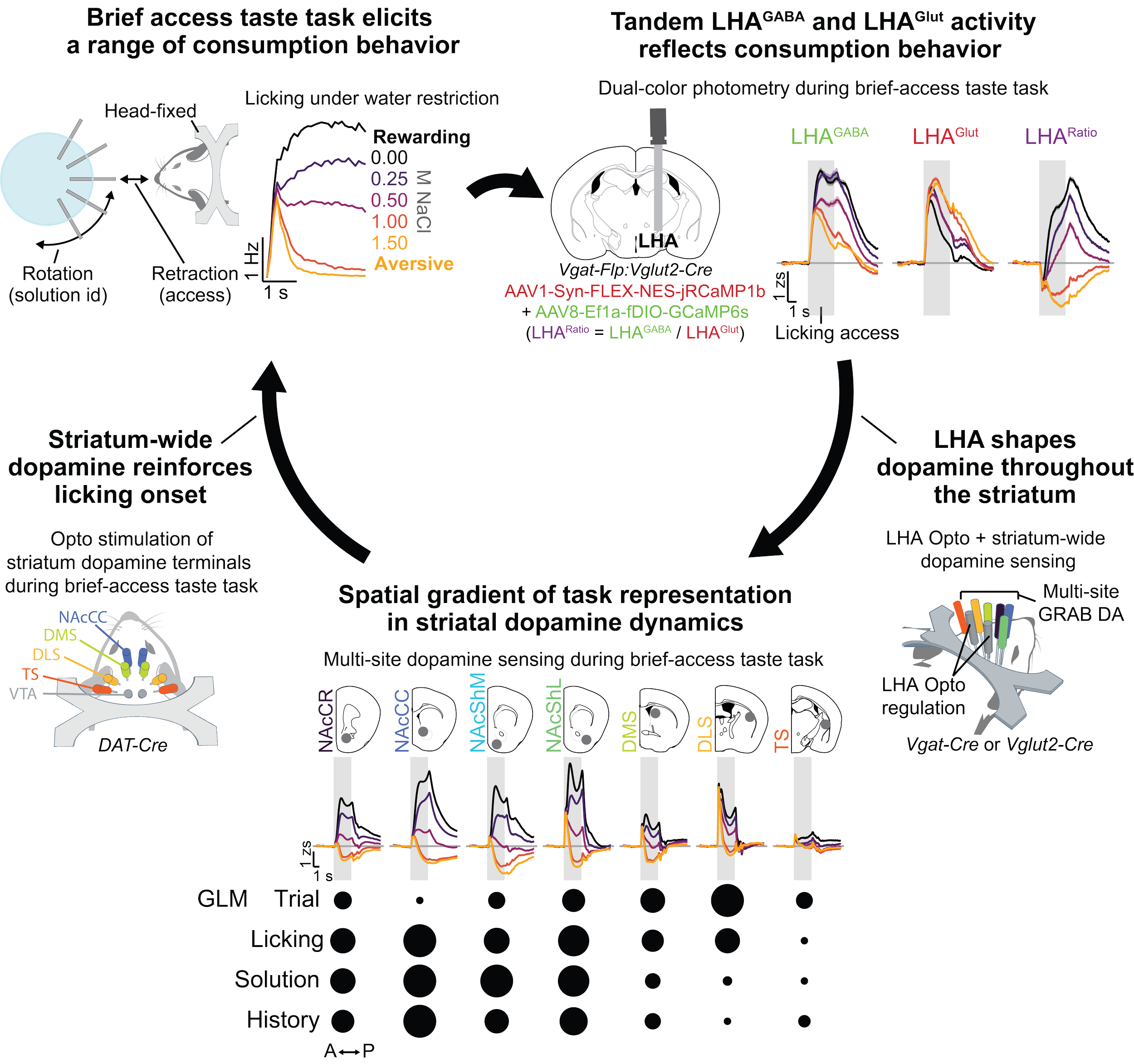
Lateral hypothalamic control of the striatal dopamine landscape during consummatory behavior
Gordon A.G. et. al., Neuron, 10.1016/j.neuron.2026.09.002 2026
The lateral hypothalamic area (LHA) contains GABAergic and glutamatergic neurons that converge on midbrain dopamine circuits, exerting opposing control over feeding and reinforcement. How these neurons behave during consummatory behavior and how they shape dopamine release across the striatum remains unresolved. Here we show that LHA GABAergic and glutamatergic neurons independently scale their activity as mice consume rewarding and aversive solutions, and that their balance sets a spatially organized dopamine landscape along the striatum's anterior-posterior axis: anterior regions track solution value and recent history, posterior regions encode sensorimotor features, and release at each site is controlled locally rather than propagated across subregions. This landscape tracks LHA activity, depends on it causally, and reinforces licking initiation. These results position the LHA as a central regulator of a striatum-wide dopamine landscape during consumption, providing a circuit-level framework for how the hypothalamus shapes motivated behavior.
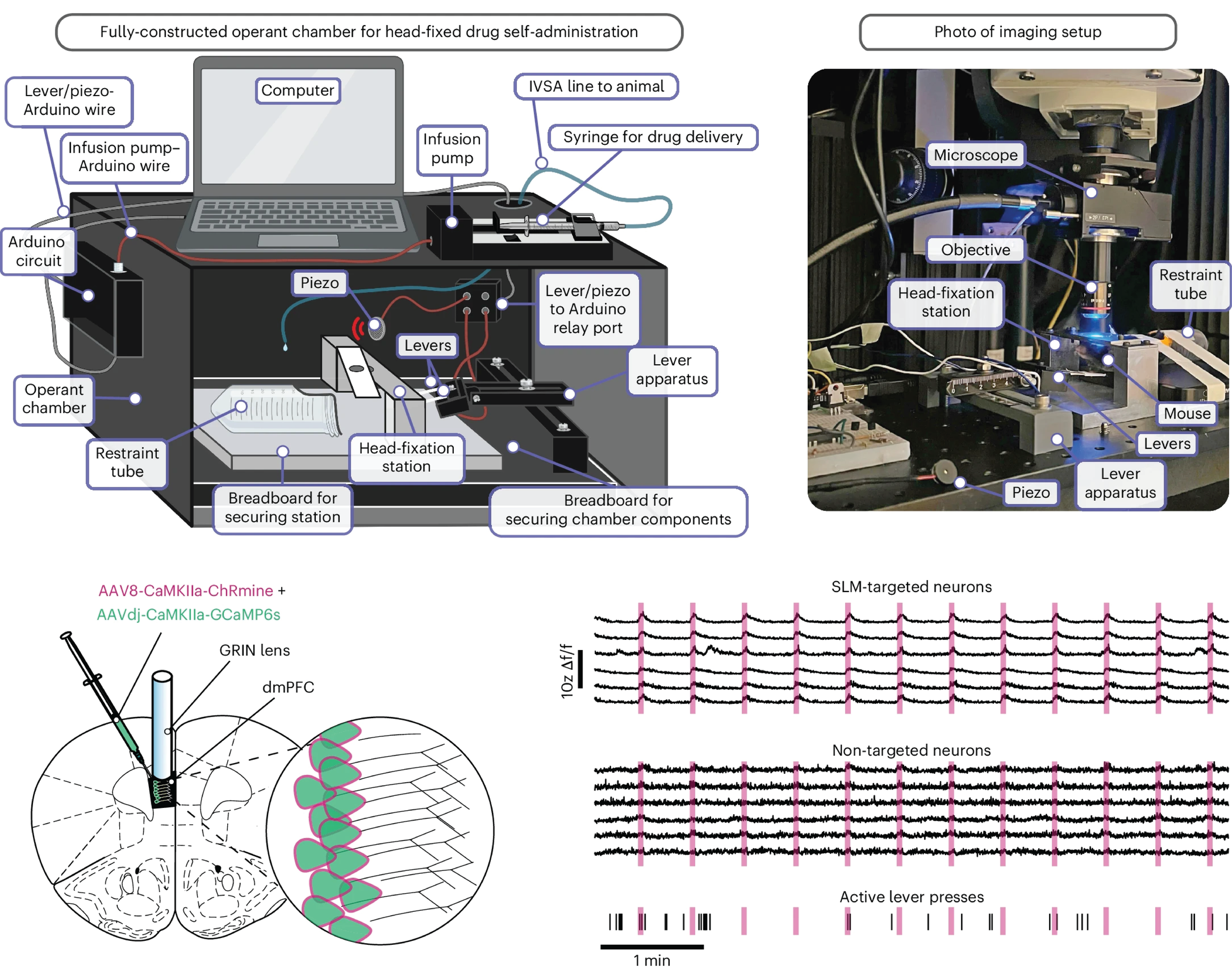
Drug self-administration in head-fixed mice
Doncheck E.M.*, Clarke R.E.*, Gordon A.G.* et. al., Nature Protocols, 10.1038/s41596-026-01406-1., 2026
*co-first
Drug self-administration has the greatest construct and predictive validity of the preclinical models for substance use disorder, providing landmark insights into the neurobiology of addiction. However, these experiments have traditionally been performed in freely moving animals, which can prohibit the incorporation of emerging neurotechnologies that require or are greatly facilitated by head restraint. Recently, we developed and validated a head-restrained approach in mice for intravenous and oral self-administration of drug and nondrug rewards. Here we present a step-by-step protocol for these experiments, including custom equipment construction, open-source software implementation and adaptation, catheter implantation, and unique considerations for conducting head-fixed self-administration experiments. To ensure that each component can be implemented by a wide range of audiences, detailed descriptions are provided so that this Protocol may serve as a standalone guide for researchers with varying levels of experience.
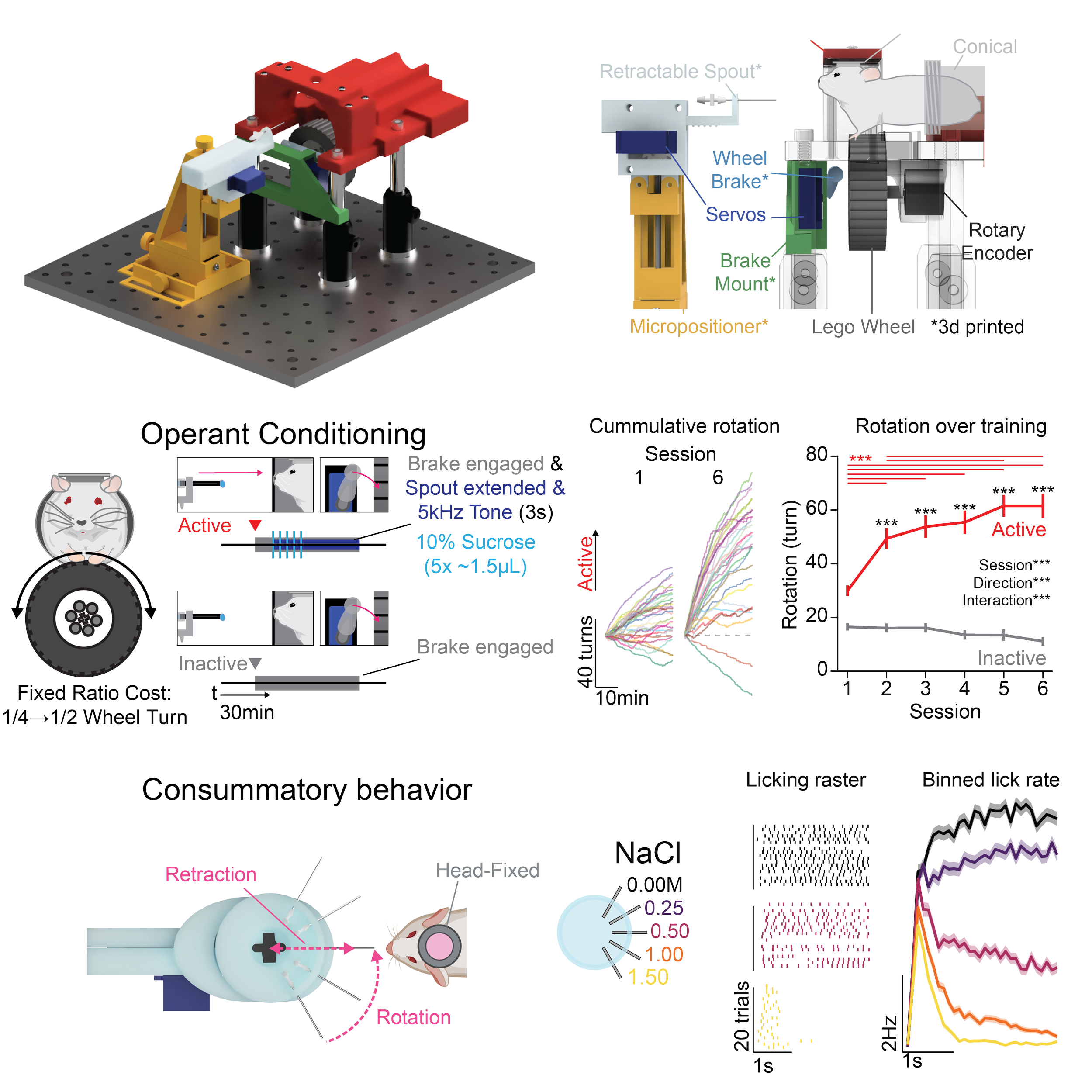
An open-source platform for head-fixed operant and consummatory behavior
Gordon et. al., eLife, 10.7554/eLife.86183, 2023
Head-fixed behavioral experiments in rodents permit unparalleled experimental control, precise measurement of behavior, and concurrent modulation and measurement of neural activity. Here, we present OHRBETS (Open-Source Head-fixed Rodent Behavioral Experimental Training System; pronounced ‘Orbitz’), a low-cost, open-source platform of hardware and software to flexibly pursue the neural basis of a variety of motivated behaviors. Head-fixed mice tested with OHRBETS displayed operant conditioning for caloric reward that replicates core behavioral phenotypes observed during freely moving conditions. OHRBETS also permits optogenetic intracranial self-stimulation under positive or negative operant conditioning procedures and real-time place preference behavior, like that observed in freely moving assays. In a multi-spout brief-access consumption task, mice displayed licking as a function of concentration of sucrose, quinine, and sodium chloride, with licking modulated by homeostatic or circadian influences. Finally, to highlight the functionality of OHRBETS, we measured mesolimbic dopamine signals during the multi-spout brief-access task that display strong correlations with relative solution value and magnitude of consumption. All designs, programs, and instructions are provided freely online. This customizable platform enables replicable operant and consummatory behaviors and can be incorporated with methods to perturb and record neural dynamics in vivo.
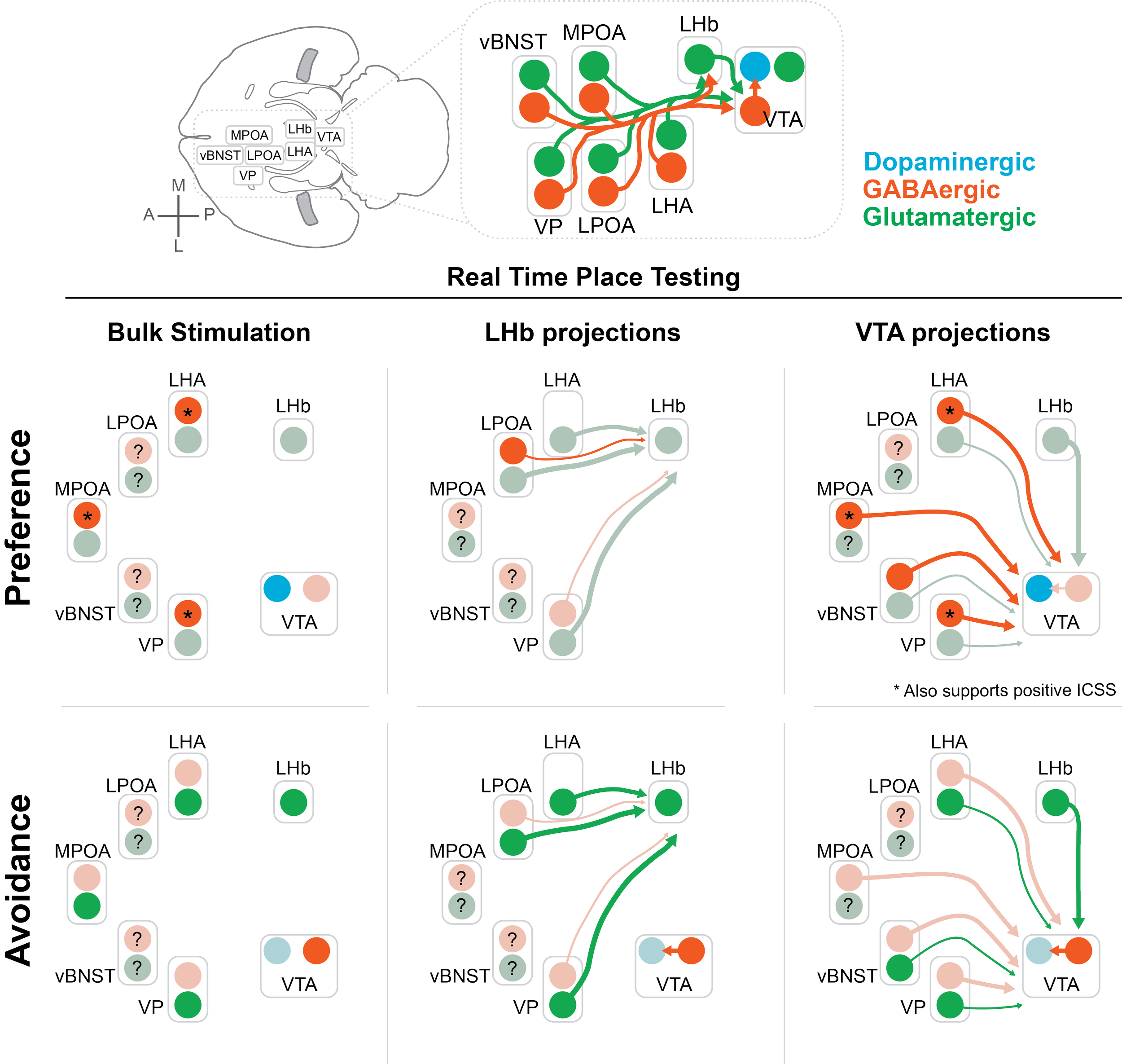
Illuminating subcortical GABAergic and glutamatergic circuits for reward and aversion
Gordon et. al., Neuropharmacology, 10.1016/j.neuropharm.2021.108725, 2021
Reinforcement, reward, and aversion are fundamental processes for guiding appropriate behaviors. Longstanding theories have pointed to dopaminergic neurons of the ventral tegmental area (VTA) and the limbic systems' descending pathways as crucial systems for modulating these behaviors. The application of optogenetic techniques in neurotransmitter- and projection-specific circuits has supported and enhanced many preexisting theories but has also revealed many unexpected results. Here, we review the past decade of optogenetic experiments to study the neural circuitry of reinforcement and reward/aversion with a focus on the mesolimbic dopamine system and brain areas along the medial forebrain bundle (MFB). The cumulation of these studies to date has revealed generalizable findings across molecularly defined cell types in areas of the basal forebrain and anterior hypothalamus. Optogenetic stimulation of GABAergic neurons in these brain regions drives reward and can support positive reinforcement and optogenetic stimulation of glutamatergic neurons in these regions drives aversion. We also review studies of the activity dynamics of neurotransmitter defined populations in these areas which have revealed varied response patterns associated with motivated behaviors. This article is part of the special Issue on 'Neurocircuitry Modulating Drug and Alcohol Abuse'.