Multi-site fiber photometry
The Gordon Lab uses a Neurophotometrics fiber photometry system with branching patch cords, which allows us to record signals from many brain regions simultaneously in behaving mice. Rather than studying one region in isolation, this approach reveals how activity across an entire system relates to behavior. After each experiment, we reconstruct the location of every fiber in 3D and register it to a common brain atlas. This lets us build spatiotemporal maps showing how signals vary across and within brain regions as behavior unfolds.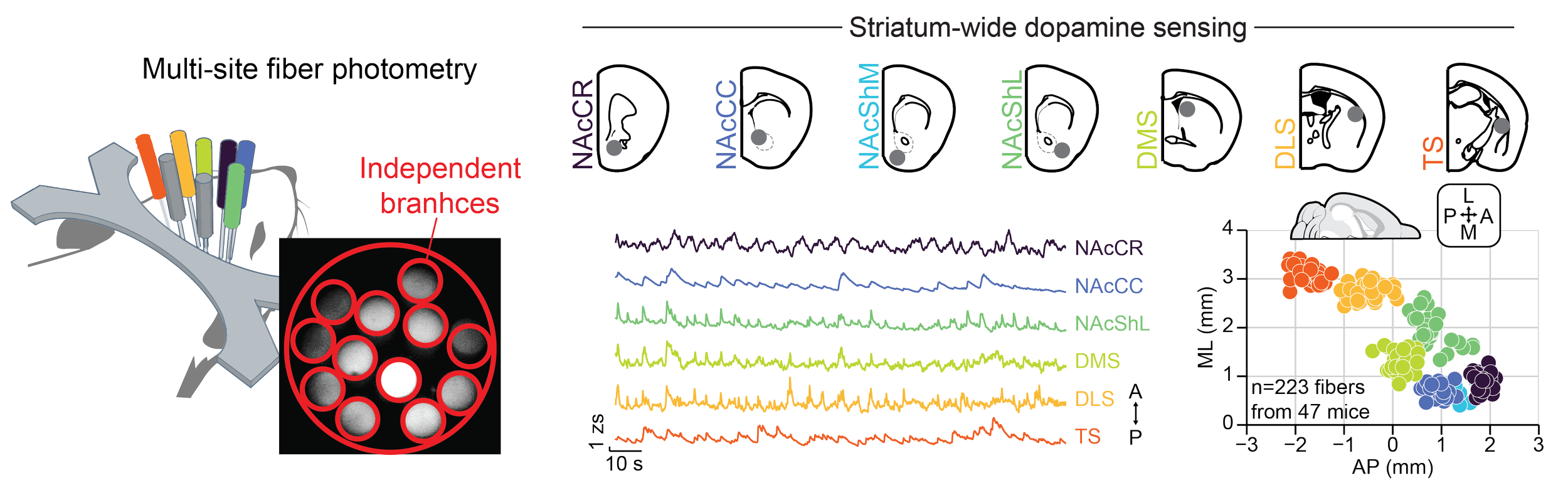
Fluorescence lifetime photometry
The Gordon Lab uses a fluorescence lifetime photometry system designed by Haining Zhong's lab at Oregon Health & Science University. Conventional photometry measures fluorescence intensity, which is impacted by sensor expression, photobleaching, and fiber coupling, limiting comparisons to rapid changes within a session. Fluorescence lifetime is largely insensitive to these factors, allowing us to track neuronal signals across hours, days, and weeks. This lets us separate slow, sustained dynamics from fast, transient ones and determine how each changes during the development and expression of disease states.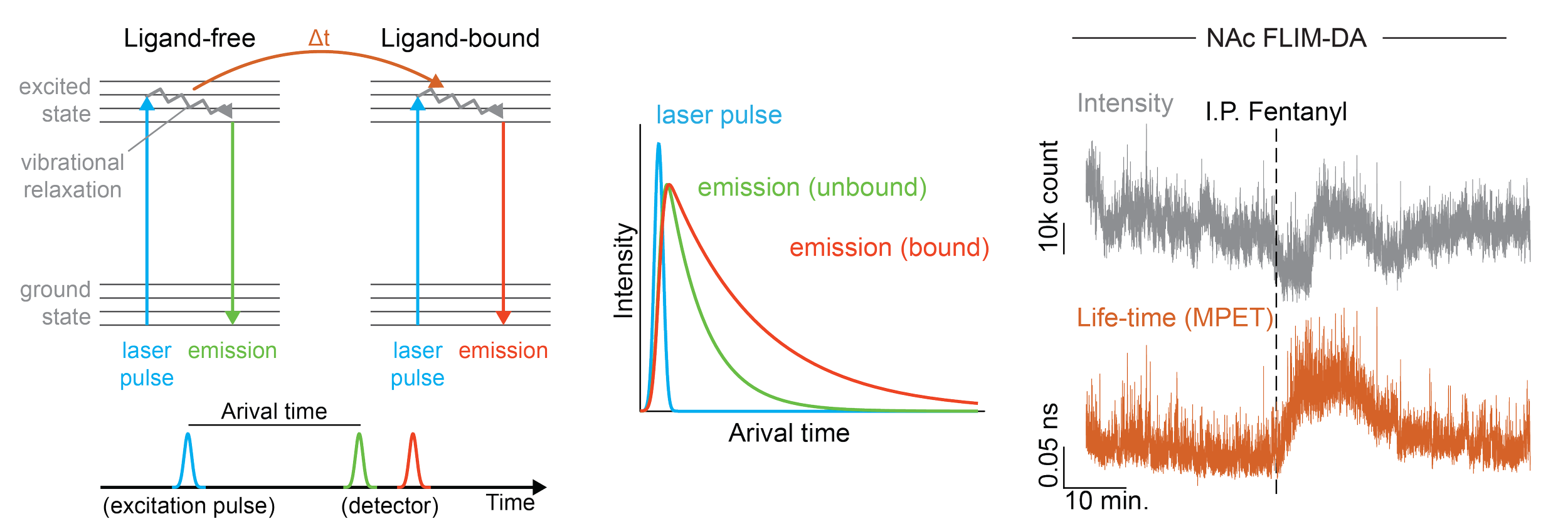
Multi-photon imaging during behavior
The Gordon Lab uses two-photon calcium imaging to record the activity of dozens of individual neurons at once in head-fixed mice. By combining this approach with Cre-driver mouse lines, we can target genetically defined populations of neurons and track how single cells within each population respond during behavior. Pairing imaging with our open-source OHRBETS behavioral platform allows us to measure neuronal activity during consummatory and operant tasks. 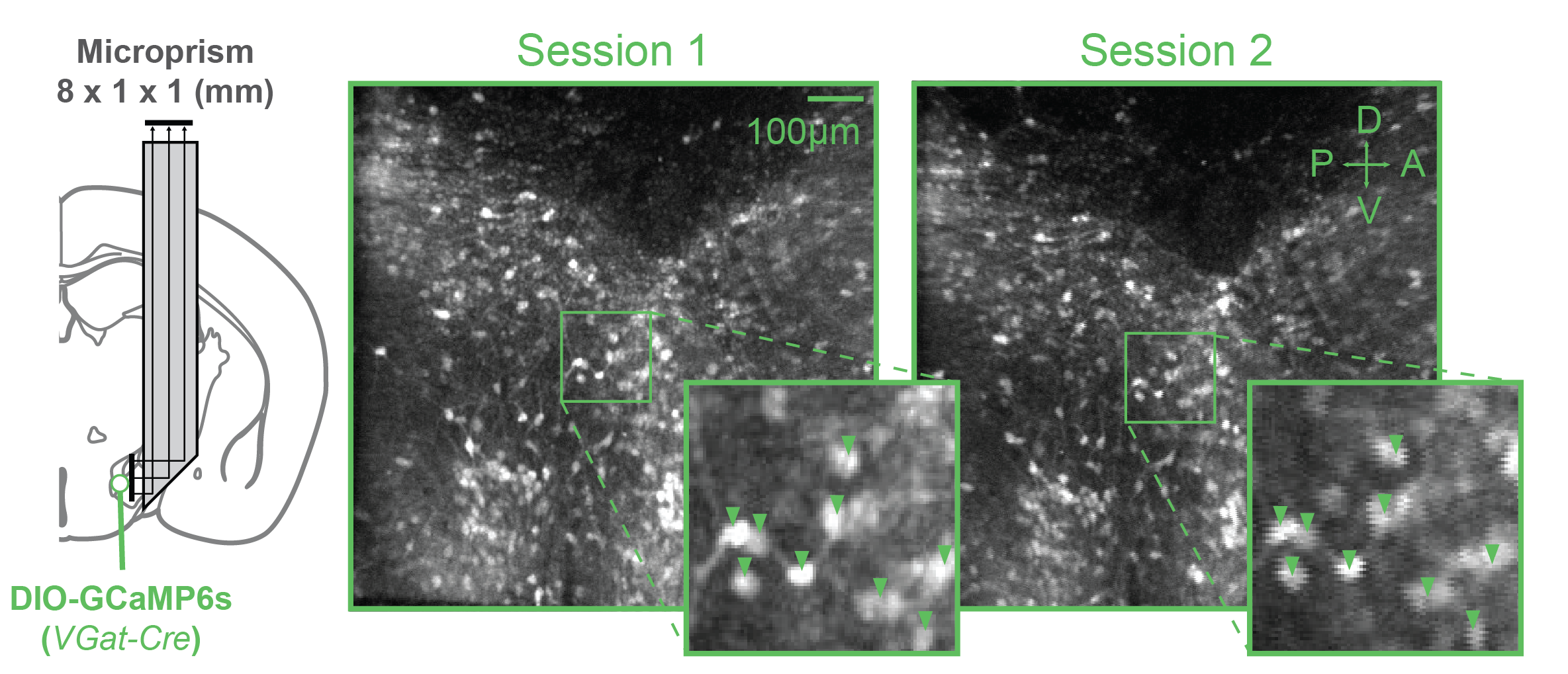
Open-source tool development
The Gordon Lab develops open-source hardware and software to make sophisticated behavioral experiments accessible and affordable. Adam designed OHRBETS, a head-fixed behavioral platform built from 3D-printed parts and an Arduino-based controller, with a retractable spout, an operant wheel, and a multi-spout module for delivering several solutions within a session. OHRBETS supports a range of consummatory and operant tasks, including instrumental conditioning, brief access taste tests, intracranial self-stimulation, and real-time place preference, and integrates with fiber photometry and two-photon imaging. For examples, check out Gordon-Fennell et al 2023 eLife and Doncheck, Clarke, Gordon et al 2026 Nature Protocols. 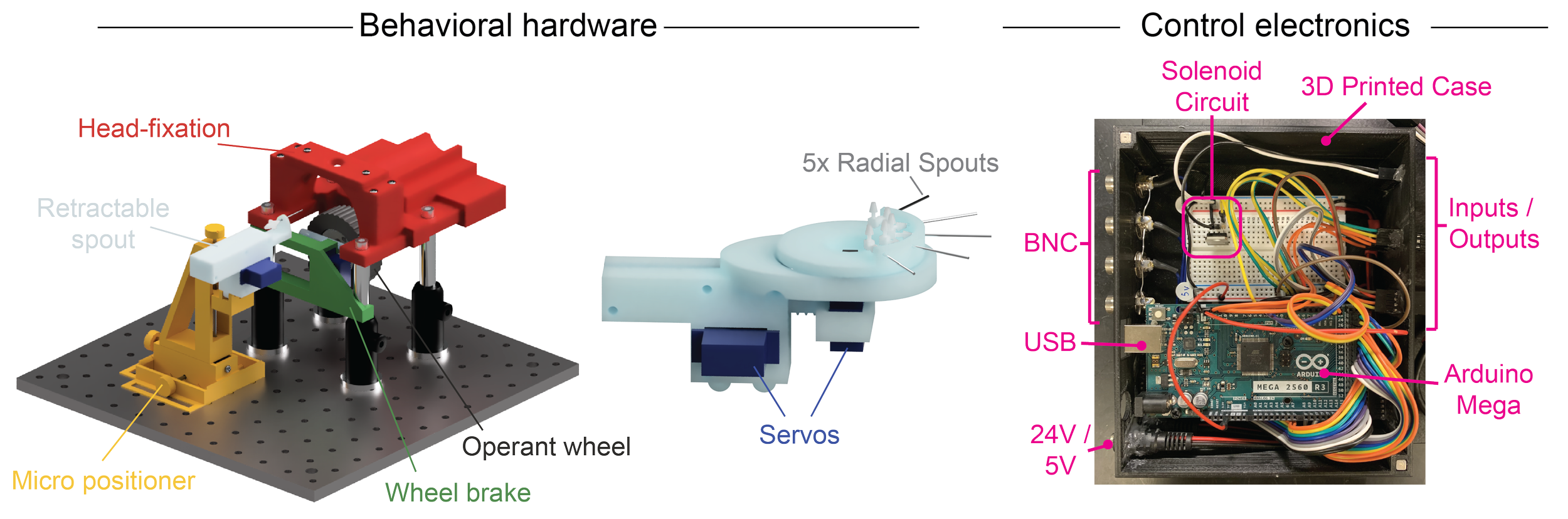
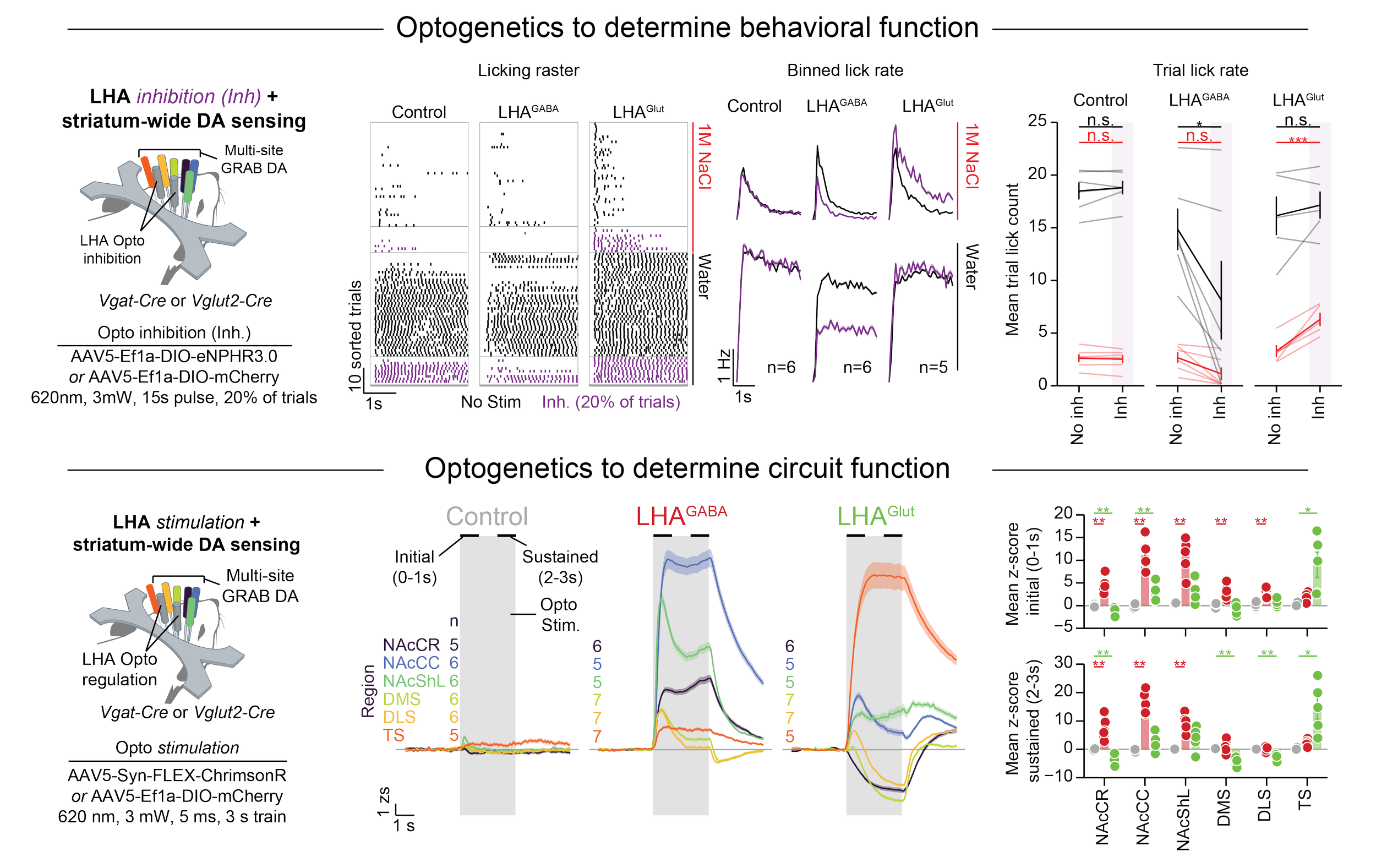
Optogenetics for behavior and circuit functions
The Gordon Lab uses optogenetics to activate or inhibit genetically defined populations of neurons with millisecond precision. To determine behavioral function, we manipulate neuronal activity during specific moments of a task and measure the resulting changes in behavior, such as consumption or reward seeking. To determine circuit function, we combine optogenetic manipulation with functional imaging, revealing how a single population regulates downstream signals. Together, these approaches link neuronal activity to both behavior and the circuits that drive it.